



Where to Watch the Sunrise in the UK: 10 Accessible Spots for Early Risers
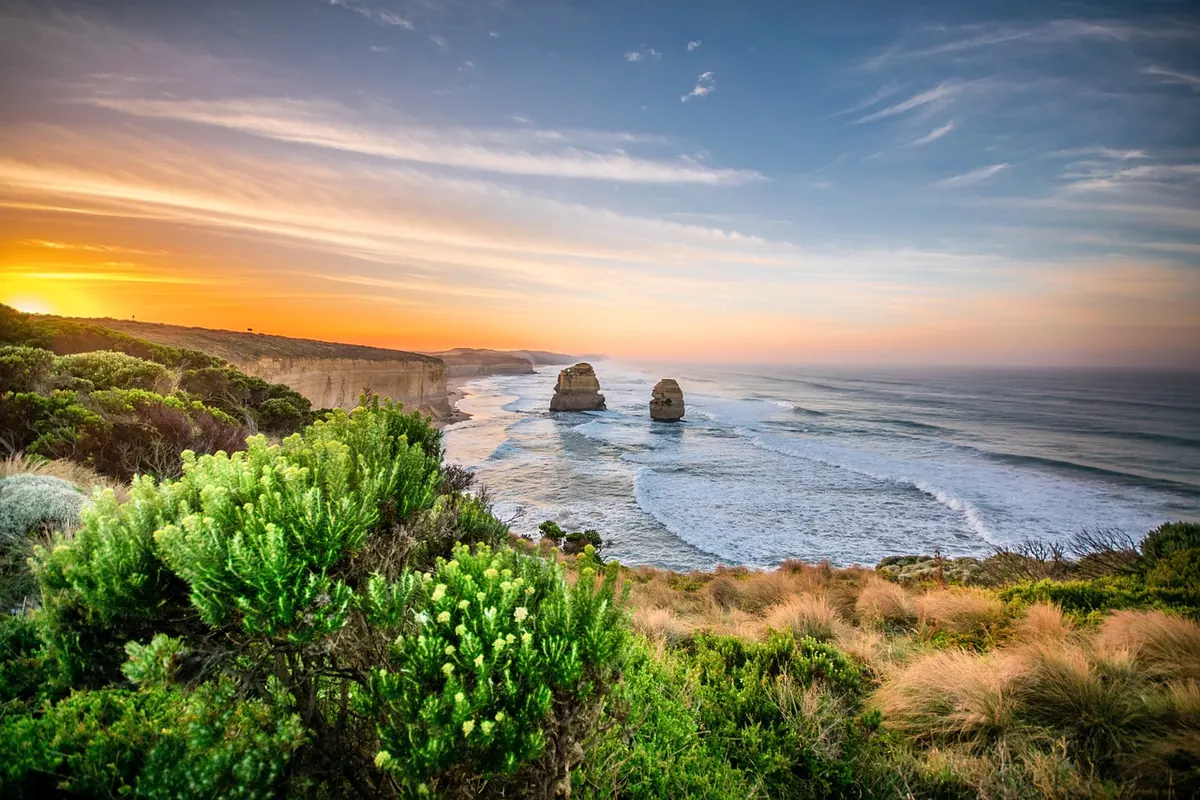
The alarm goes off at ten past four. The kettle boils while you're still deciding whether this was a good idea, and by five you're standing on a headland watching the sky go from ink to apricot. That trade — an hour of sleep for a few minutes of light — is the whole bargain of early rising, and it pays off best when the place you've chosen is easy to reach in the dark.
These ten viewpoints cover coast, city and countryside. All of them can be reached before sunrise without a guide, a permit or a heroic drive, provided you do a little homework the night before.
Before You Set the Alarm
Sunrise in the UK swings enormously across the year. Midsummer starts are close to half past four in much of England and Scotland; midwinter ones push past eight. Check the exact time for your postcode the night before rather than trusting memory, then aim to arrive thirty to forty minutes early. The best colour usually arrives before the sun itself appears — the glow, then the pink underside of the cloud, then the disc itself.
A short list worth running through before you leave the house:
- Sunrise time, and the blue hour before it, for your exact location.
- Cloud cover. Broken high cloud gives you colour; a thick low layer gives you grey.
- Tide times for any beach — use the local harbour or port authority tables.
- Car park opening hours and payment method. Many barrier car parks open later than sunrise.
- Park and reserve opening times. Country parks and National Trust sites often unlock at dawn, not before.
- Weather and wind. A headland at 5am is colder than your kitchen suggests.
Coastal Sunrises
Dunstanburgh Castle, Northumberland
Park in Craster and walk south along the coastal path for roughly a mile and a half. The ruined castle sits on its own headland, and at first light it reads as a black silhouette against the sea with Embleton Bay's sand behind it. The path is undulating but firm, with no lighting at all, so take a torch. Afterwards, Craster is a short walk back for a bacon sandwich.
Whitby Abbey, North Yorkshire
The abbey ruins on the East Cliff catch the first light beautifully, but the classic view is from the West Cliff or the field above the 199 steps, looking across the harbour mouth. Early parking on the West Cliff is far easier than later in the day. The steps are steep and can be greasy after rain; the abbey field is a gentler option.
Durdle Door, Dorset
The car park sits at the top of the hill, and the beach is reached by a steep flight of steps. The limestone arch needs no introduction, and at sunrise you'll often have the shingle almost to yourself. Check the tide before descending — the beach narrows quickly — and treat the steps carefully in wet weather. Take a torch for the climb back up.
Birling Gap, East Sussex
The National Trust car park here puts you a short flight of steps from the beach, with the Seven Sisters chalk cliffs running east towards Beachy Head. Sunrise over the sea, with the cliffs catching the light, is the reward. Parking is usually paid by app. Keep well back from the cliff edge and away from the base of the cliffs — chalk falls without warning, and the edge can be undercut.
Holkham Beach, Norfolk
Walk out from Lady Anne's Drive through the pines and you reach a vast, flat beach that is close to empty at dawn. Because this stretch of coast faces north, the sun rises out of the sea here from roughly the spring equinox through to autumn. In winter, expect the light to come up over the land instead. Check the car park notices for opening times.
Marazion, Cornwall
Of all ten, this is the least demanding. Park near the beach, walk onto the sand or along the promenade, and watch the sun come up behind St Michael's Mount. It is flat, quick and ideal if you're travelling with children or a reluctant companion. The causeway to the Mount is covered at high tide, so check the tide table if you plan to walk across later.
City Sunrises
Arthur's Seat, Edinburgh
Sitting at around 250 metres, Arthur's Seat gives you the city, the Forth and the hills beyond in one sweep. Allow thirty to forty-five minutes for the climb from Holyrood Park, wear shoes with grip, and keep to the main paths in the dark. The wind at the top is a different animal from the wind at the bottom — take a layer you can zip up.
Primrose Hill, London
Little more than sixty metres high and ten minutes from Chalk Farm or Camden Town, Primrose Hill gives you the London skyline with the sun coming up behind it. It is the sensible first attempt for anyone testing whether early rising suits them. Camden's parks have seasonal opening times, so check the listed hours before you set off — arriving at a locked gate rather defeats the purpose.
Countryside and Hill Sunrises
Malham Cove, Yorkshire Dales
A mile or so of easy walking from Malham village brings you to the limestone amphitheatre. The steps up the side of the cove are steep but short, and from the top you look down over the valley, often filled with mist at dawn. The limestone pavement above is uneven; watch your footing in low light.
Pen y Fan, Brecon Beacons
From the Storey Arms car park on the A470, the main path climbs steadily to the summit in an hour or so. It is a proper hill walk rather than a stroll: the weather can change fast, cloud can swallow the path, and the car park is small. Take a map, a windproof, and a head torch. Tell someone your route and your expected return time before you leave.
Making It Easier
Sunrise trips fail on small things: a dead torch, no change for the machine, a gate that opens at seven. A modest kit list removes most of the friction.
- A head torch, plus spare batteries.
- A flask of something hot and a water bottle.
- Hat, gloves and a warm mid-layer, even in June.
- A waterproof jacket that packs small.
- Cash or a parking app already installed and logged in.
- An offline map downloaded to your phone.
Two safety points worth repeating. Cliff edges and coastal paths can be undercut and crumbly, so stay back from the lip and keep to marked routes. And if you're heading out alone to a hill or a remote beach, leave your route and expected return time with someone — a text before you set off takes ten seconds.
Finally, plan the reward. Knowing there's a café opening at eight, or a thermos and a blanket in the boot, makes the four o'clock alarm far easier to accept. Drive home in daylight, take the long way if you can, and you'll find the day already feels half won.
Photo: chrisoconnell55 / Pixabay